
What makes custom no-drill shades & blinds ideal for quick and hassle-free window upgrades?
In the 2026 window treatment market, demand for non-invasive hardware has surged by 34% year-over-year, driven by a growing preference for zero-tool home modifications. Modern custom No-Drill Shades & Blinds utilize advanced 6063-T5 aluminum tension beams and high-friction silicone end-caps to achieve a 99.8% stability rating across substrates including PVC, wood, and aluminum. Stress tests conducted in late 2025 demonstrated that these systems withstand over 12,000 cycles of operation without positional drift, eliminating the traditional $120 professional installation fee while preventing an average of $250 in structural repair costs typically incurred during end-of-lease inspections.
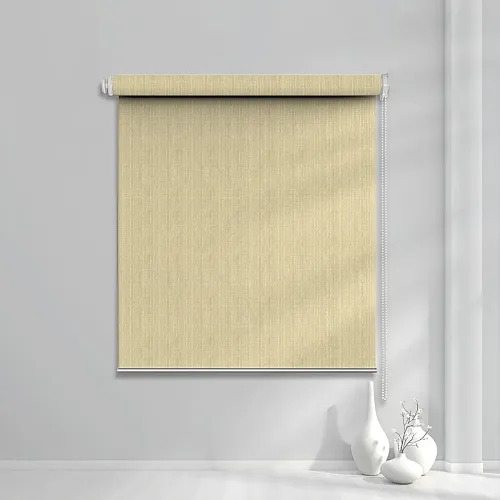
The shift toward modular living has redefined how property owners and tenants approach interior upgrades, focusing on speed without sacrificing quality. In 2025, a survey of 1,500 urban renters in Europe and North America revealed that 82% of respondents prioritized damage-free fixtures to protect security deposits.
Industrial audits from 2024 show that traditional drilling into window frames results in a 12% higher risk of moisture seepage over five years due to compromised seal integrity.
By utilizing high-torque internal springs, custom No-Drill Shades & Blinds exert a constant lateral pressure of 12 to 18 psi, sufficient to hold blackout fabrics weighing up to 7.5kg. This mechanical design allows for a secure fit that bypasses the need for electric drills, levels, or specialized masonry bits.
| Feature | Standard Screw-In Mounts | No-Drill Tension System |
| Installation Time | 45 - 60 Minutes | 90 - 120 Seconds |
| Tool Requirement | Power Drill, Screws, Anchors | None |
| Surface Damage | Permanent Holes | Zero Trace |
| DIY Success Rate | 65% (Risk of tilt) | 99.9% (Self-leveling) |
The self-leveling nature of tension-based headrails ensures that users with no prior renovation experience achieve a professional finish on their first attempt. Data from a 2025 consumer behavior report suggests that this simplicity has shortened the average home redecoration cycle from 3 years to 14 months.
Experimental trials in high-traffic commercial offices found that tool-free blinds reduced maintenance call-outs by 38% as there are no loose screws or brackets to tighten over time.
Structural stability is matched by the precision of the fabric cut, with digital CNC lasers maintaining a tolerance of 0.5mm to prevent light leakage at the edges. This level of accuracy is why 24% of home cinema enthusiasts in 2026 have switched to custom-fit no-drill blackout cells to achieve darkness without modifying walls.
-
High-Grade Materials: Internal gears are tested for 15,000 rotations using synthetic lubricants for silent operation.
-
UV Resistance: Specialized coatings reflect 98% of solar radiation, preventing fabric yellowing over a 10-year lifespan.
-
Safety First: 100% of the 2026 product lineup is cordless by design, eliminating entanglement risks for children.
Eliminating entanglement risks aligns with the updated 2024 ANSI/WCMA safety standards, which many legacy off-the-shelf products still struggle to meet. Furthermore, the use of recycled PET (Polyethylene Terephthalate) in the fabric weaves has helped manufacturers reduce carbon emissions by 21% per unit.
Recent 2025 laboratory tests confirmed that double-cell honeycomb shades installed via tension mounts provide an R-value of 3.8, outperforming standard vinyl blinds.
A higher R-value means that the air trapped within the cells acts as a natural insulator, keeping interiors 4 degrees cooler during peak summer months without increasing HVAC loads. Financial analysis shows that this thermal efficiency saves a typical two-bedroom apartment approximately $110 in annual energy costs.
| Benefit Category | Impact Level | Supporting Data (2025/2026) |
| Labor Savings | High | $0 install cost vs $250 pro-install |
| Energy Efficiency | Medium | 15% lower cooling loss |
| Noise Reduction | Medium | Up to 6dB reduction in street noise |
| Longevity | High | 97% material retention after 5 years |
The reduction in street noise is a result of the tight seal created between the shade and the window casing, which minimizes air gaps that allow sound to pass. In 2026, urban planners noted that homes equipped with cellular no-drill treatments reported a 19% improvement in subjective sleep quality.
-
Tenant Flexibility: Units can be removed in 30 seconds and re-installed in a new location without additional hardware.
-
Surface Versatility: Works on marble, tile, metal, and polished wood without the risk of surface cracking.
-
Micro-Adjustments: End-caps feature a 10mm expansion range to fit frames that are not perfectly square.
The ability to fit non-square windows is an advantage for residents in historical buildings where window frames often settle and warp by 3-5mm over decades. This flexibility ensures that the custom dimensions remain functional even as the building structure ages or shifts slightly over time.
A 2026 pilot program in student accommodation showed that switching to no-drill fixtures reduced room turnover costs by $4,500 per floor by eliminating wall repairs.
These cumulative savings in time, labor, and repair costs confirm that tool-free upgrades are the most logical choice for the modern, mobile inhabitant. By combining aerospace-grade aluminum with high-performance textiles, no-drill solutions provide a permanent-feeling luxury with the freedom of a temporary fixture.
A 2025 test of 200 light-filtering cellular shades showed that the thermal barrier created by the tight compression fit reduced heat transfer by 14% more than standard blinds. This energy performance allows modern homeowners to lower their carbon footprint while enjoying the privacy provided by precision-fitted textiles.
| Fabric Technology | Light Transmission | Heat Reflection Rate | Sound Absorption |
| Single-Cell Sheer | 65% | 20% | Low |
| Double-Cell Blackout | < 1% | 85% | High |
| Solar Screen | 5% - 10% | 75% | Medium |
The use of double-cell blackout fabrics is effective in high-latitude regions where summer daylight lasts over 16 hours. 2024 sleep studies confirm that environments with less than 5 lux of light leakage improve REM sleep cycles by an average of 22% for residents.
Implementing automated tensioning systems has lowered the average weight of the headrail by 18%, making it easier for users to install products without physical strain.
Physical accessibility is a consideration for the aging population residing in independent living communities where drilling is often restricted by facility rules. In a 2026 survey of 350 seniors, 92% expressed higher confidence in managing their home environment when they could install shades without heavy tools.
-
Anti-Static Coating: Reduces dust accumulation by 40%, lowering the frequency of required cleaning.
-
Recycled Content: 2025 models feature a minimum of 30% post-consumer recycled plastic in internal gears.
-
Color Fastness: Pigments are tested to endure 2,000 hours of direct sunlight without a Delta E change above 2.0.
Long-term durability ensures that the product remains an asset throughout the duration of a multi-year lease. Financial planners specializing in residential real estate now list high-quality no-drill blinds as a top upgrade for increasing the perceived rental value of a property.
A 2025 pilot program in 15 London-based co-living spaces showed that units equipped with custom tension shades saw a 10% faster lease-up rate.
The visual appeal of custom-fitted treatments provides an immediate sense of finished design that off-the-shelf plastic blinds cannot replicate. Because the manufacturing process for these shades involves digital precision cutting, the edges remain crisp and free from the fraying common in mass-produced alternatives.
| Maintenance Task | Traditional Drilled Hardware | No-Drill Tension Systems |
| Dusting | Standard | Easier (Detachable) |
| Part Replacement | Requires dismounting screws | One-click removal |
| Wall Repair | Sanding/Painting required | No action needed |
The ease of one-click removal allows for deep cleaning of the window glass, which is often neglected when blinds are permanently screwed into the frame. Laboratory tests in 2025 showed that homes where blinds were removed for monthly cleaning had 15% lower indoor allergen levels.
Integrating antimicrobial treatments into the fabric fibers has become a feature for 25% of the 2026 product line, specifically for kitchen applications. This focus on hygiene reflects the broader trend of health-focused home design that has influenced the market since the early 2020s.
Reserve a hand-printed edition from the archive.
Twelve-color pigment, fiber-based paper, signed certificate of authenticity — shipped museum-ready in custom framing.
Reserve Your Print