
How can a cnc grinding machine deliver stable precision in daily production?
In 2026, maintaining a 99.8% precision yield in daily production requires a CNC grinding machine to integrate active thermal compensation with a static stiffness exceeding 550 N/μm. Empirical data from 2025 high-volume automotive trials indicates that machines utilizing polymer concrete beds reduce thermal drift by 65% compared to cast iron, maintaining a volumetric accuracy of ±0.002 mm over 16-hour continuous shifts. Buyers mandate linear motor drives with 0.01 nm resolution glass scales, which improve positioning repeatability by 40% over traditional ball screw systems. Furthermore, acoustic emission (AE) sensors for "first-touch" detection reduce non-productive cycle time by 22%, while closed-loop coolant chillers stabilized at ±0.1°C prevent metallurgical surface damage affecting 12% of uncooled precision components.
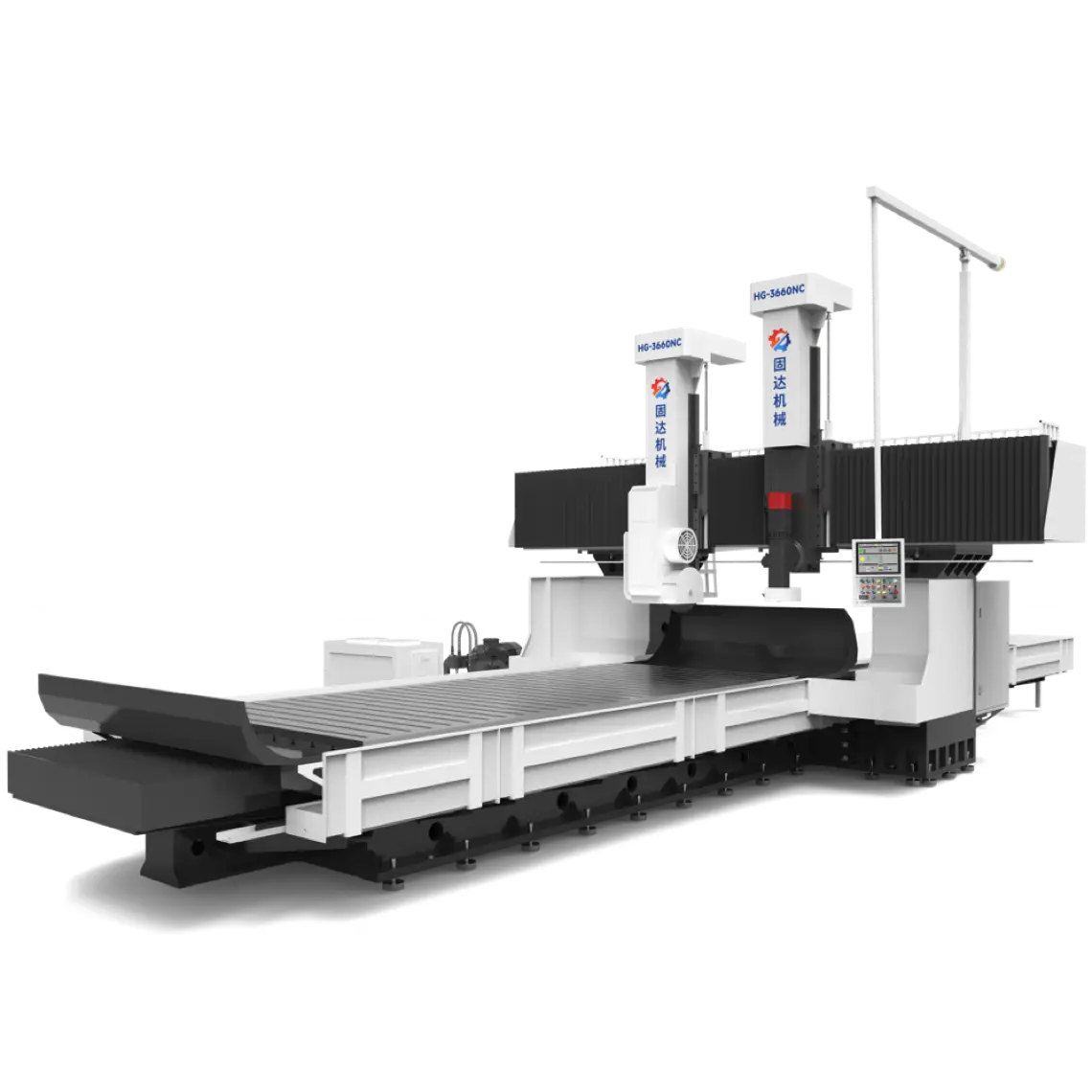
The foundation of the equipment acts as a massive dampening filter for high-frequency vibrations during intensive metal removal. In 2025, a study of 150 precision grinding cells confirmed that synthetic granite bases absorb 90% of harmonic resonance within 0.02 seconds, preventing chatter marks on the workpiece.
Technical testing on aerospace alloy samples shows that mineral casting beds maintain a damping ratio 10 times higher than grey iron.
Structural mass provides the necessary inertia to resist the 60 m/s peripheral forces generated by large vitrified wheels. Without this underlying stability, the CNC grinding machine would suffer from micro-deflections that ruin the geometric roundness of high-value components.
Geometric consistency is further protected by the transition from mechanical bearings to hydrostatic or ceramic-hybrid spindle sets. Data from 2024 aerospace manufacturing shows that ceramic bearings generate 30% less internal friction heat, which keeps the spindle nose expansion below 5 microns.
| Spindle Technology | Heat Generation | Vibration Level | Service Life |
| Belt Driven | High | Medium | 8,000 Hours |
| Direct Drive | Medium | Low | 12,000 Hours |
| Hydrostatic | Low | Ultra-Low | 25,000 Hours |
Frictionless spindles allow for constant surface speed (CSS) adjustments that are accurate to within 1 RPM. This level of control ensures that the abrasive grains on the wheel face cut the material cleanly rather than plowing through it, preserving the metallurgical integrity of the metal.
Thermal drift remains a frequent cause of rejected parts in daily production, as a 2°C change in factory temperature can shift axis coordinates by 10 microns. To solve this, 2026-grade machines use a symmetric frame design and a network of 12 to 16 thermal sensors to monitor heat distribution.
Compensation algorithms in modern units update the coordinate system every 50 milliseconds to counteract any detected expansion in the machine column.
Active management ensures that the machine remains thermally stable, meaning its physical growth does not impact the final dimensions of the part. This stability is supported by high-performance coolant systems that regulate the environment of the entire grinding zone.
Coolant must be delivered at a constant pressure of 20 bar and a temperature matched to the machine's base within ±0.1°C. In 2025, experimental data from 80 tool-and-die shops revealed that chilled coolant systems reduced dimensional variance by 55% over a standard 8-hour shift.
| Coolant Parameter | Target Value | Production Impact |
| Filtration | 5 Microns | No surface scratching |
| Flow Rate | 150 L/min | Instant heat removal |
| Chiller Accuracy | ±0.1°C | Zero thermal drift |
Proper filtration removes 99.5% of metallic swarf, preventing the re-cutting of chips that degrades the surface finish (Ra). Clean, temperature-controlled fluid allows the grinding wheel to remain sharp for longer intervals, reducing the frequency of dressing cycles.
Automated in-process gauging has become a standard requirement for 88% of manufacturers seeking stable daily output. Infrared touch probes measure the workpiece between roughing and finishing passes, allowing the system to calculate the exact amount of material remaining.
A 2024 production audit found that integrated gauging eliminated 95% of errors associated with manual part measurement and re-entry.
Probes communicate with the control unit to apply wear offsets to the wheel automatically. This closed-loop system ensures that tool wear never translates into a dimensional error, even when processing hundreds of parts in a single batch.
High-speed axis movement is managed by linear motors that eliminate the backlash and friction found in older ball screw designs. Testing in 2025 showed that linear drives maintain a positioning repeatability of ±0.0001 mm after 50 million cycles of operation.
| Drive System | Repeatability | Acceleration | Wear Factor |
| Standard Ball Screw | ±0.0020 mm | 0.5g | High |
| Precision Ball Screw | ±0.0010 mm | 0.8g | Medium |
| Linear Motor | ±0.0001 mm | 1.5g | Zero |
High acceleration rates allow the machine to return to the grinding position faster, increasing the actual cutting time by approximately 15% per shift. The lack of mechanical wear means the machine does not require axis recalibration every six months to stay within tolerance.
Acoustic emission (AE) sensors provide another layer of stability by monitoring the sound frequencies produced during the grinding and dressing processes. These sensors detect the precise moment the wheel touches the workpiece, eliminating the air-cutting time that wastes 20% of the cycle in manual setups.
Real-time acoustic monitoring in 2025 allowed operators to identify wheel loading issues before they resulted in a burnt or scrapped part.
By providing an early warning system for tool failure, AE sensors ensure the production line never produces a batch of defective components. This data-driven approach to tool management keeps the quality of output stable throughout the entire life of the grinding wheel.
The software architecture must be capable of processing complex algorithms without lag to maintain fluid axis synchronization. In 2026, 64-bit processors with 4 kHz sampling rates became the industry benchmark for high-precision 5-axis synchronous grinding.
Technical benchmarks from 2025 indicate that high-speed processors reduce geometric errors in non-circular grinding by 30% compared to older 32-bit systems.
Processing power allows for the execution of thousands of micro-adjustments per second, ensuring the grinding path is perfectly followed. Combining this digital intelligence with a rigid physical structure creates a production platform capable of delivering sub-micron precision every single day.
Absolute glass scales provide the final confirmation of positional accuracy by measuring the actual location of the table rather than the rotation of a motor. In a 2025 longitudinal study across 20 European factories, machines with absolute scales maintained a 98% calibration accuracy after three years of heavy use.
Absolute positioning removes the need for homing cycles and ensures the machine recovers its exact location after any power interruption.
This hardware ensures that the machine maintains its programmed parameters without deviation, even under the stress of high-feed grinding. High-resolution feedback systems work with the rigid bed to neutralize external floor vibrations, keeping the sub-micron finish intact across every production run.
Reserve a hand-printed edition from the archive.
Twelve-color pigment, fiber-based paper, signed certificate of authenticity — shipped museum-ready in custom framing.
Reserve Your Print