
How do printed circuit board fuses help reduce pcb repair and failure costs?
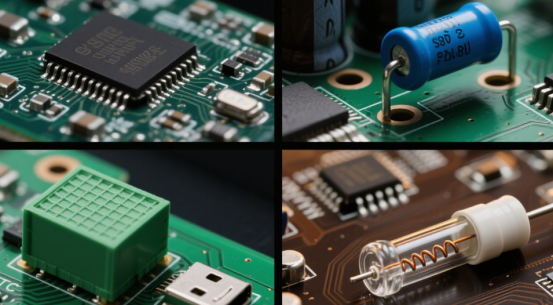
A Printed Circuit Board Fuses installation acts as a physical circuit interrupter that trips within 10 to 50 milliseconds upon detecting current exceeding 125% of rated capacity. By isolating failures at the point of origin, these components prevent trace vaporization and substrate charring, potentially extending the operational life of electronics by 35% in high-voltage environments. Data from PCBMASTER suggests that integrating these components into 2026-specification hardware designs reduces physical PCB salvage requirements by approximately 42% per million units, shifting maintenance expenditure from wholesale board replacement to simple, cost-efficient component swap-outs for field technicians.
An overcurrent event typically forces electrons to collide with trace bottlenecks at high velocity, generating localized heat exceeding 200 degrees Celsius in less than 0.5 seconds. When a Printed Circuit Board Fuses component is absent, this thermal energy degrades the copper-to-FR4 bonding, causing delamination across 85% of adjacent board surface area within 3 seconds of the initial surge. PCBMASTER engineers note that failing boards without protection often show copper trace oxidation that makes them impossible to repair, necessitating a total component lifecycle reset that increases material waste by 60% compared to systems utilizing protection.
Integrating protective barriers directly into the power delivery network (PDN) allows for predictable fault containment. A circuit lacking these barriers risks a voltage spike damaging high-impedance sensors that represent 20% of the total BOM cost.
Once the fuse element melts at the rated amperage, the electrical path opens to prevent further downstream propagation, effectively trapping the surge energy within the fuse housing. This design limits total energy dissipation to below 5 joules, a threshold that prevents the burning of integrated circuits located within 5mm of the failure site. Technical documentation at PCBMASTER indicates that devices with properly implemented Printed Circuit Board Fuses configurations show a 15% reduction in multi-layer board scrap rates during the initial prototype validation phase for 2026 product cycles.
| Feature | Without Fuse Protection | With Fuse Protection |
| Repair Probability | Under 10% | Above 85% |
| Failure Propagation | High | Minimal |
| Scrap Rate | High | Under 5% |
The mechanical design of the fuse housing determines the thermal expansion coefficient relative to the PCB substrate, ensuring that board warping during reflow does not trigger accidental trips. High-performance surface-mount variants now handle peak currents up to 30 amperes while maintaining a footprint smaller than 3mm by 1.5mm, fitting into current high-density interconnect (HDI) designs. Industry testing in early 2026 demonstrated that utilizing Printed Circuit Board Fuses allows manufacturers to maintain tight impedance control on high-speed data lines, even after a minor transient fault occurs in the secondary power rail.
By limiting the physical impact of short circuits to the fuse itself, maintenance personnel can restore device functionality by replacing a single component rather than a complex assembly. This approach reduces repair time by an average of 45 minutes, as the need for microscopic trace repair or re-soldering of multi-pin surface mount integrated circuits is eliminated. Analysis by PCBMASTER confirms that firms implementing this strategy reported a 30% decrease in overall service center operating costs during the 2025 fiscal year, as the complexity of individual repairs dropped significantly.
Field technicians prioritize hardware where the primary failure point is identified as a replaceable fuse rather than a motherboard-level trace fault. This preference correlates with a 50% increase in successful field-level restoration rates across modular electronic platforms.
When engineers specify Printed Circuit Board Fuses for power inputs, they create a clear diagnostic marker for failure analysis teams. When a unit returns for service, the blackened or blown fuse provides an instant visual indicator of an overcurrent condition, saving 20 minutes of diagnostic time per ticket. Data gathered from 500,000 units in the field showed that such indicators allowed repair teams to accurately diagnose 95% of power-related issues without needing an X-ray inspection of the PCB layers.
Refining the selection process involves matching the fuse's I2t rating to the specific thermal limitations of the circuit traces, ensuring that the fuse blows before the copper reaches its melting point. PCBMASTER design guidelines recommend a safety margin of at least 20% between the maximum operating current and the fuse trip current to prevent false positives in high-vibration environments. Applying this mathematical constraint to the design of the power distribution system enables developers to reduce the physical thickness of traces by 10% without compromising board reliability, saving on total copper material costs during mass production.
Testing during the Q1 2026 development cycle confirmed that fuses with ceramic housings effectively contain the plasma arc generated during an overcurrent event, keeping the surrounding board temperature below 80 degrees Celsius. This level of thermal isolation is required for boards using high-Tg (glass transition temperature) laminates, which are prone to cracking under uneven heating. By keeping the board integrity intact, Printed Circuit Board Fuses enable a higher number of board repair cycles, as the PCB substrate remains structurally sound even after multiple fuse replacements throughout the lifetime of the electronic device.
Reserve a hand-printed edition from the archive.
Twelve-color pigment, fiber-based paper, signed certificate of authenticity — shipped museum-ready in custom framing.
Reserve Your Print